Allinone

Search your query

  • Home
  • HOLLYWOOD
    • Hollywood Songs
    • New Trailers
    • Movies
  • BOLLYWOOD
    • Movies
      • Movies
      • Trailers
      • Bollywood Gossip and News
    • Video Songs
    • New Trailers
    • Bollywood Gossip and News
  • Featured
  • Health
    • Childcare
    • Doctors
  • Home
  • Vrindavan Guide
    • Food Corner
    • Market
    • Stock
  • Downloads
    • Dvd
    • Games
    • Software
      • Office
  • Education
    • Child Category 1
      • Sub Child Category 1
      • Sub Child Category 2
      • Sub Child Category 3
    • Child Category 2
    • Child Category 3
    • Child Category 4
  • Featured
  • Health
    • Childcare
    • Doctors
  • Contact Us

Tuesday, 4 September 2018

List of the 10 Richest People in the World

 September 04, 2018     No comments   

1. Jeff Bezos

Responsible for the growth of online shopping and e-commerce, Jeff Bezos made his fortune by founding Amazon.com. The 53-year-old CEO of Amazon, launched the retail giant in 1994 after leaving his New York hedge fund job. Initially an online book retailer operated out of Bezos’s garage in Seattle, Amazon.com grew to become the world’s largest online shopping retailer, now worth over $430 billion, according to CNBC.
Bezos also owns a private space company Blue Origin and purchased The Washington Post in 2013 for $250 million. Amazon bought the upscale grocery chain Whole Foods in June for an estimated $13.7 billion.
Bezos’s parents, Jackie and Mike Bezos, operate the Bezos Family Foundation, which supports youth education.

Industry: Technology

Net worth: $112 billion

2. Bill Gates

Born in Seattle, Gates used his first computer in 1967 while a kid in school. And about a decade later, he and his childhood friend Paul Allen, who also developed an interest in computers at their school, co-founded Microsoft together in 1975.
He was Microsoft’s CEO until 2000, and was the company’s chairman and largest shareholder until 2014. Gates is still a member of the board and serves as a technology adviser for the company.
Gates and his wife, Melinda, co-chair the Bill and Melinda Gates Foundation, which is the world’s largest private charity. The foundation, launched in 1999, focuses on ending infectious diseases around the world, including HIV and malaria.
Outside of Microsoft, Gates is a public figure who, along with Warren Buffett and Mark Zuckerberg, founded “The Giving Pledge” to encourage other billionaires to donate a hefty amount of their wealth to charity. His charitable foundation focuses on health and development issues across the world.
An influential figure, the 61-year-old also releases a list of his favorite books each year.

Industry: Technology

Net worth: $90 billion

3. Warren Buffett

Berkshire Hathaway CEO Warren Buffett is an iconic figure and investment genius who bought his first stock when he was just 11 years old and filed his first taxes at age 13. Nicknamed the Oracle of Omaha, Buffett owns more than 60 companies.
One of the world’s best investors, Warren is also known for his cheap spending habits. In the recently released HBO documentary Becoming Warren Buffett, the 86-year-old billionaire said he typically pays under $4 for breakfast from McDonald’s each morning.
Like his peers, Buffett is a philanthropist and has vowed to give away 99% of his wealth.

Industry: Finance and investments

Net worth: $84 billion

4. Bernard Arnault

Bernard Arnault is responsible for many of the world’s most fashionable brands, including Bulgari, Louis Vuitton, Dom Perignon and Sephora. The French billionaire is the chairman and CEO of LVMH, which is the largest luxury goods company in the world.
The 68-year-old began his career as a civil engineer and gained control of his family parent company, Groupe Arnault. In the 1980s, he bought fashion brand Christian Dior — a move that avoided bankruptcy for the brand.
Though he hasn’t cracked the top 10 in several other rankings, Arnault’s wealth grew by more than $5 billion in late April 2017 when he announced he would take full control of Christian Dior, Forbes reported.
Arnault is an art collector and created the Paris-based Foundation Louis Vuitton, which supports artistic creation in France.

Industry: Retail
Net worth: $72 billion

5. Mark Zuckerberg

Mark Zuckerberg was only a sophomore at Harvard University when he created the first version of Facebook in 2004. The social media powerhouse, which first began on college campuses, now has more than 1.2 billion users and dozens of offices located around the world. The company is now worth $400 billion.
Zuckerberg, the youngest of the world’s top billionaires at 33, is the chairman and CEO of Facebook in addition to being its co-founder. The 2011 award-winning film The Social Network was based off of Zuckerberg’s founding of Facebook while in school, and the subsequent drama that came as a result.
Like other billionaires, Zuckerberg is a philanthropist who has donated millions to charitable causes. He and his wife, Priscilla Chan, have pledged to donate 99% of their wealth through the Chan Zuckerberg Initiative.

Industry: Technology

Net worth: $71 billion

6. Amancio Ortega

Amancio Ortega is a Spanish self-made billionaire best known for founding Inditex fashion group, which includes Zara clothing stores. The richest man in Europe, Ortega co-founded Inditex in 1975 with his ex-wife Rosalia Mera, who passed away in 2013.
Ortega, 81, is also the wealthiest retailer in the world and owns 59% of Inditex, which operates 7,000 stores worldwide. He stepped down as chairman of the company in 2011.
His approach to his company’s success can be attributed to two factors: speed and customers. Oretga’s “fast fashion” philosophy included refreshing the stock at Zara stores twice a week, CNBC reported. And instead of focusing on what’s in at fashion shows, the company follows bloggers and customers for what they’re wearing to inform what is sold, Fortune reported.
Unlike other billionaires, Ortega has stayed out of the public eye. In fact, no photograph of him was ever published until 1999.

Industry: Retail

Net worth: $70 billion

7. Carlos Slim Helu

Mexican business tycoon Carlos Slim Helú is the richest person in Mexico, and owns more than 200 companies in industries ranging from banking to retail to telecommunications. The 81-year-old owns America Movil, the largest mobile phone company in Latin America, as well as the Grupo Carso conglomerate company, which includes a host of retailers and restaurants, among other companies.
Slim’s father immigrated to Mexico from Lebanon with his family before Slim was born and had several successful retail and real estate businesses, Business Insider reported. Slim inherited the businesses after his father’s death in 1953, and founded his his first company, insurance company Inversora Bursatil, after he graduated from college in the early 1960s.
His influence extends outside of Mexico as well. He now owns 17% of the New York Times — the largest individual shareholder of The Grey Lady.
Slim is a philanthropist, but has criticized other billionaires for giving their money to charity. Instead, Slim has said company leaders need to “create companies” rather than “give away companies.”

Industry: Telecommunications, banking, retail

Net worth: $67.1 billion

8. Charles and David Koch (tied)

Charles Koch, 81, is the CEO, chairman and co-owner of Koch Industries, the second-largest private company in the United States.
Both he and his brother, 77-year-old David —the company’s executive vice president — each own 42% of the conglomerate, which produces brands like Dixie Cup, Quilted Northern paper towels and Stainmaster carpet cleaner. The two brothers inherited the Wichita, Kansas-based company from their father.
The conservative Koch brothers use their deep pockets to influence politics and public policy through an expansive network. Koch-aligned networks like Americans for Prosperity gave rise to the libertarian movement, and the brothers have spent hundreds of millions backing politicians and influencing policy.
In fact, their network planned to spend $889 million just on the 2016 election, the New York Times reported. In 2012, the network spent under $400 million.

Industry: Conglomerate

Net worth: $60 billion each

9. Larry Ellison

Larry Ellison, the founder, chairman and former CEO of software company Oracle, came from humble beginnings.
The 72-year-old billionaire founded his company in 1977, having never taken a computer science class in his life, according to the Smithsonian. He moved from Chicago to California after dropping out of college (twice), and worked several jobs where he learned about computer programming, including one where he helped build a database for the CIA.
He and two co-workers left the company to found Oracle, which became the world’s most popular database. He was the highest-paid executive in the United States before he stepped down as CEO in 2014, the Wall Street Journalreported.
Ellison has already given millions to charity and education, and plans to give away billions.
But he’s also spent his wealth in more luxurious ways as well. He has millions of dollars worth of real estate around the world, including the entire island of Lanai in Hawaii.

Industry: Software

Net worth: $58.5 billion

10. Michael Bloomberg

Michael Bloomberg wears many hats: CEO, philanthropist and politician.
In 1981, he launched Bloomberg L.P., an information technology and media company that has now grown to be worth $45 billion with more than 100 offices worldwide. He was a partner at Salomon Brothers, a Wall Street investment bank, before he started his own company.
As a philanthropist, Bloomberg has donated $5 billion of his wealth to contribute to certain causes that align with his political interests, including gun control and climate change.
And Bloomberg is an experienced politician. He served three terms as mayor of New York City from 2002 to 2013. During his tenure as mayor, he commuted to work at City Hall from his home on the Upper West Side by taking the New York City subway every day.
He also considered running as an independent in the 2016 presidential election, and has said he does not plan to run for the highest U.S. office in the future.

Industry: Media

Net worth: $50 billion


Read More
  • Share This:  
  •  Facebook
  •  Twitter
  •  Google+
  •  Stumble
  •  Digg

How can I use Quora to make money?

 September 04, 2018     No comments   

Ah! If there ever were a question just for me, this one is is probably it.
I’ve been making a significant, mostly passive income from Quora for about a year now. Admittedly, I only stumbled into it.
I had only discovered Quora just a few months prior. I was working a summer internship in a city separate from most of my friends, so I had a lot of spare time on my hands. Having always been a voracious reader, Quora kept me up a bit too late many or most work nights that summer.
At some point, I began to feel a little guilty learning so many amazing things from other people and not giving back myself. So, I started writing answers to questions in the e-commerce and distribution space. I had been working independently in e-commerce for 8 years, and my internship was at a Fortune 200 distribution company.
It’s worth noting that the thought of putting so much effort into writing these posts with the potential to reach tens, even hundreds of thousands of people made me super nervous at first. The first few times I hit submit, I immediately stood up and paced around a bit to shake it off.
While most of my initial answers received very little attention, one blew up. The response (upvotes, comments) was tremendously positive. It was a great feeling.
Around the same time, I was also reading quite a bit about affiliate marketing. I knew what it was all about from previous reading. After all, I had spent 8 years selling physical products online.
For those of you not familiar, affiliate marketing allows you to make a commission selling other people and company’s products online, without actually fulfilling product orders or serving customers. You just have to make the introduction. You don’t have to be hired. You just post a link to the product or service that is unique to you, and software tracks any sales that result from your recommendation. The software knows that buyer purchased after clicking your link.
Finally, I decided to give it a shot. There were services I was already mentioning and linking to in my answers that had affiliate programs themselves, so I swapped my links out for affiliate links.
Within 30 minutes, I made one $30 commission.
I immediately did the math to calculate how much more money I would make that day. $30 every 30 minutes… 12 hours left in the day… Holy #$%^!!!
I didn’t make a penny more that day. But over the course of the next couple weeks, I did quite well.
As it turns out, you can’t just drop affiliate links wherever you please and without disclosure. It violates Quora’s policy, and disclosure of affiliate links is required by the Federal Trade Commission.
This goes for most 3rd party platforms like facebook, LinkedIn, Medium, and reddit as well— even though you create and contribute the content yourself.
Now, if you still want to make money from affiliate marketing on these platforms, the key is to build blogs relevant to what you are writing about. That way, you own the platform and what kind of links you post are up to my discretion (so long as affiliate relationships are disclosed).
Then you can post really informative, helpful content on 3rd party platforms like facebook groups, Quora, and reddit to cultivate an audience. From that content you can link to supplementary resources on your blog where you are free to use affiliate links and earn commissions. If that content is great as well, people will continue to read your content, use your links to support you financially, and share with friends.
Let’s explore an example of how this works in practice:
Did you know many credit card companies offer 0% interest as an introductory rate for the first X months of having their credit card? Did you know credit card companies also pay hefty affiliate commissions for successful referrals?
During my senior year of college, I was a little strapped for cash. I had money, but most of it was tied up in my online businesses and/or stocks. However, I had a job lined up for after graduation, so I knew I would have cash coming in soon.
All of my friends were taking senior vacations. I didn’t want to ask my parents for money— they had covered enough.
So, I opened a few credit cards with 0% interest for 6–9 months. During the second semester of my senior year, I partied through an online marketing conference in Vegas, visited a friend in NYC, went skiing in Colorado, searched for housing in KC, and spent a weekend at the lake.
I paid the cards off in the first couple months after graduation using my salary.
Now, it’s not the smartest financial decision I’ve ever made, but I’m not the only college student who would enjoy living it up a bit during senior year despite a lack of funds.
How can I make money on that?
Easy. Tell the story around Reddit, facebook groups, Quora, Medium… Link from those posts to a blog post titled something like “Top 10 Credit Cards Offering 0% Interest.” That blog post would compare the pros and cons of each, and link to applications using, you guessed it, affiliate links. Links to credit cards paying me $50, $100, even $150+ for a signup.
Again, it doesn’t stop there. Readers will enjoy the content. They will share with friends. They will come back for more helpful content again and again, assuming I keep it coming.
Building the blogs themselves is a piece of cake these days. Here’s a 5-minute how-to. You don’t need to know how to code, you don’t need to be an expert designer— even the writing is made easier with tools like Hemmingway App.
You can find affiliate products and services to promote with a simple google search. There are a lot of spammy products out there which are no good for your readers, nor your reputation.
While many companies run their own affiliate programs independently, many utilize affiliate networks to manage the link tracking and connect with people who will promote their products. Affiliate networks are great places for you to find products and services you can promote.
Here are just a few:
  • Amazon: That’s right! Amazon has an affiliate program for nearly everything listed. Commissions vary. The interesting thing about Amazon is that you will not earn commissions solely on what you link a reader to, but everything they purchase in the next 24 hours!
  • Share-a-Sale: Home to more than 3,900 affiliate programs— Share-a-Sale is sure to have something for your niche. Not only do their advertisers, pay for referred sales, many pay for clicks and ‘leads’ too. My personal favorite.
  • Rakuten: One of the oldest networks around. Rakuten is known for its intuitive interface and over 1,000 advertisers, including many well-known brands.
  • FlexOffers: Many well-known companies use this network, including Macy’s, HP, and Hallmark, along with a variety of lesser known companies.
  • Commission Junction: Probably the #1 affiliate network overall, CJ is home to many of your household names. Credit cards, banks, insurance, security, real estate, fashion, you name it. Because there are so many big name advertisers here, competition can be stiff. You may actually have to apply for programs, and your site will be held to a higher standard.
To sign up for a network or affiliate program, you will want to opt in as a ‘publisher’ (‘advertisers’ are who you promote for). Most will require that you provide a link to your blog. Again, you can set up a blog in very little time (video tutorial here). Hosting your blog will cost just less than $1/day, or 66 cents if you pay annually.
If you provide good content for people, not only can you expect affiliate commissions, but generally people will reach out to you for consulting, coaching, friendship, business propositions, and more, depending on what you write about.
Plus, anytime you have influence like that, there’s always the opportunity to sell your own info product, for which you can recruit other affiliates to sell for you.
Best of luck!
 credit : Parth Theway, lives in Warewolf's World (2017-present)
Read More
  • Share This:  
  •  Facebook
  •  Twitter
  •  Google+
  •  Stumble
  •  Digg

How to promote your YouTube channel

 September 04, 2018     No comments   

1. Optimize your YouTube content so that it ranks in search engines

Search engine optimization (SEO) is important for your YouTube profile, channel, and individual videos. This is what will make your content discoverable in search rankings.
YouTube’s algorithm takes multiple items into account when pulling videos for search results, so include as much information as possible. Know what keywords you want to rank for and include them in video titles, file names, descriptions, tags, annotations, and relevant fields in your profile.
Not sure what keywords you want to rank for? Reverse engineer the search process. If someone wanted what your YouTube videos offers—what words or phrases would they use in a Google search to find them?
Hootsuite wanted to rank for “how to use Hootsuite” (of course) and in the spring of 2017 created a video and optimized it for that phrase. As soon as it was published it started to climb the Google rankings, leapfrogging third-party videos that had years to build up views and backlinks.
Here’s how we did it:
  • We included the keyword in the title, meta description, and image file
  • The video description includes other keywords related to using the Hootsuite dashboard
  • We linked to the video on our blog and social channels
  • We always encourage people to subscribe to our channel and those subscribers were notified when the video was uploading—which meant instant views
  • We created keyword-rich playlists, which gave YouTube deeper information about our video’s topic and, as the platform says, “More text-based content equals more views”

2. Create great video titles

This is likely the first thing someone will see wherever they find your video. The title must be informative and attention-grabbing. Here are some best practices you should consider when toying around with options:
  • Keep it simple. You may be inclined to include every piece of info on your video, but great titles are short and to the point. Google truncates page titles at 66 characters, so anything beyond that is cut off in search results.
  • Do keyword research. Use a tool like Google Adwords Keyword Planner to nail down one or two relevant keyword phrases to include in your title. This will help your video rank higher in search results.
  • Tell the would-be viewer why they should watch. Like a headline on a blog post, your title is a promise to the viewer. You’re telling them how they will benefit by taking the time to view your content.
Here is an example of both a good and not so good video title:
  • Not so good: Super Cool Tutorial for Makeup To Get You Ready For The New Tim Burton Movie
  • Good: Tim Burton Look: Makeup Tutorial Video

3. Create clear and compelling YouTube thumbnails

These tiny images are a preview of the video—appearing as the default image wherever it is embedded.
Make sure the thumbnail is as large and clear (high quality) as possible. It must also accurately represent the video’s content and should be easily tied back to your brand.Of course the most important thing is that the image is attention-grabbing and compelling. Some of the most effective thumbnails include:
  • Close-ups of faces
  • Text overlays
  • Brightly colored backgrounds
  • Tasteful branding (a small logo or watermark in the corner of the image)
  • Contrast and outlines (around people or objects)While YouTube will automatically generate image previews options when you upload a video, your best bet is to create a custom thumbnail. For those unfamiliar with uploading thumbnails, here are some specs to help you make sure you upload the best thumbnail for your video:
    • Have a resolution of 1280×720 (with a minimum width of 640 pixels)
    • Upload image formats such as .JPG, .GIF, .BMP, or .PNG
    • Remain under the 2MB limit
    • Try to use a 16:9 aspect ratio as it’s the most used in YouTube players and previews

      4. Fill out as much information on your YouTube profile as possible

      Here are a few tips for creating a compelling profile that will help draw in viewers and subscribers.

      Keep it consistent

      While you can only do so much to customize the look of your YouTube profile page, ensure that your brand elements—colors, backgrounds, logo, icons, and layouts—are as consistent as possible across your social channels and website.

      Optimize your YouTube channel description

      Again, both your YouTube channel and individual video titles should be descriptive and optimized for search. Conduct keyword research to help your page improve its chances of ranking.
      This is also the section where you can sell yourself. What problem does your channel solve for your audience? What need do you meet? Whether you’re teaching, entertaining, or showing them something they’ve never seen, spell it out for potential viewers.
      Also use this space to establish your schedule. When and how often will you publish new videos? Let your viewers know so they can come back for more—and stick to your own schedule.

      Include Contact Links

      It’s great that folks are viewing your videos—but they may want to contact you in other ways. Make it easy for them to send you feedback, ask questions, or make queries about your products. Link back to your website as well as other social media channels, and include a contact email.
      18 Smart Ways to Promote Your YouTube Channel | Hootsuite Blog
      Image via FAQ Tube.

      5. Take advantage of email marketing

      Publishing great videos is certainly a solid first step—but you have to make sure your audience knows when you post new content. And what better way to deliver updates than through your followers’ inboxes?
      Email is still one of the top channels marketers can use to reach their audience. With an 18 percentindustry average open rate and a 66 percent purchase rate, email is still king when it comes to sales conversions.
      And for eager YouTube creators, there are multiple ways you can reach your loyal fans through email. Let’s examine a few:
      • Existing email list: If your brand already has an email subscriber list, let them know about your YouTube channel and whenever you publish a new video.
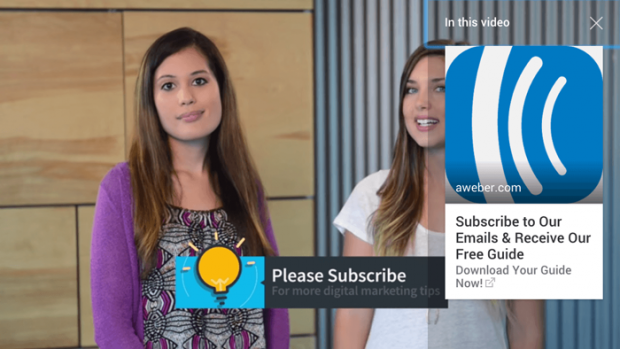
      • Lead magnets: Got some great content in the bank? Use that to create a lead magnet. Advertise in multiple places on your channel, and request an email address for viewers to download that content. OptinMonster offers an in-depth walkthrough of how to use lead magnets in your YouTube channel.
      • Playlist intro/outro: Rather than editing every single video to include a call to action, include an intro/outro for your playlist letting viewers know about your email list and asking them to subscribe. You can simply direct them to click on a link in the video description.
      • Call to action: Create a call to action on a card asking viewers to subscribe to your email list.
      18 Smart Ways to Promote Your YouTube Channel | Hootsuite Blog
      Image via AWeber.

      6. Stay active in the community

      It isn’t enough to regularly create content, you need to actively engage your audience as well.
      When a viewer takes the time to comment on your video, take the time to reply. Interact and answer any questions. Viewers are more likely to engage themselves if they know they’ll get a response.
      You should also be active in niche communities, of which YouTube has many. Find the right community for your brand and subscribe to other channels. Leave comments and feedback on videos and share any that your own audience might find useful.
      Promoting other channels and participating in the community underscores your brand as an active, engaged YouTuber—and your viewers will notice.

      7. Advertise your YouTube channel

      To reach new audiences with your content, try YouTube’s many advertising options.
      Run an ad campaign with AdWords for video. Don’t fret—there’s no minimum ad budget, so you don’t have to break the bank when you run your ads.
      18 Smart Ways to Promote Your YouTube Channel | Hootsuite Blog
      Image via Entrepreneur.
      And to ensure you create an ad that really resonates with your target audience, YouTube’s Creator Academy has offered up some tips to guide you through the process:
      • Keep ads short (30 to 60 seconds) and make the most of the first five seconds to keep them watching.
      • Use clear calls to action (CTAs) to tell your viewers what they should do next, such as subscribe to your YouTube channel, sign up for your email list, or share your video.
      • Reach new audiences with placement targeting and interest category targeting.
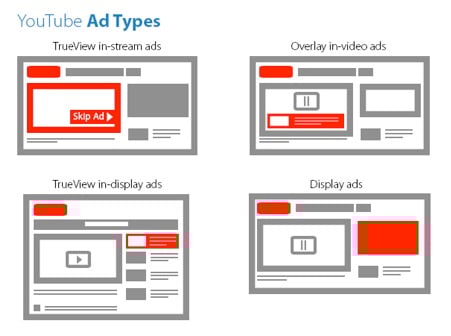
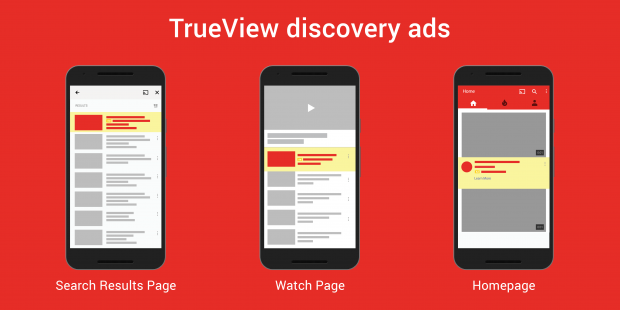
      • Use the TrueView format to your advantage. TrueView In-display ads appear as a thumbnail and text on YouTube watch pages in the right-hand side of a viewer’s suggested and recommended videos. This format lets you pay a “cost-per-view.” You’re only charged when a user clicks through from your ad and begins watching your video on a watch page. In-display ads are a great place to promote your existing videos, but before you do, make sure they’re well-optimized.
      18 Smart Ways to Promote Your YouTube Channel | Hootsuite Blog
      Image via Think with Google.

      8. Promote your YouTube channel on your blog

      Your YouTube promotion strategy can and should go beyond the platform itself.
      Create blog content that’s relevant to your videos and embed those into your posts. You also might try including a transcription of the content to help with search.
      For more tips on creating compelling blog content, check out our lessons from more than 300 Hootsuite posts.

      9. Run a contest

      When it comes to engaging your audience, there are few tactics that work as well as a contest. Everyone loves free stuff.
      Incentivize viewers to subscribe to your channel with giveaways and prizes. Try creating a contest kickoff video with a clear call to action (enter the contest) and share it across your other social channels.
      To run a successful YouTube contest you must your audience, offer prizes that will encourage them to take action, and have a contest promotion strategy. For much more on this, check out our post The Secrets to Running a Successful YouTube Contest.

      10. Include a link to your YouTube channel in your email signature

      While this tactic may seem overly simple, smart marketers never overlook an easy promotion opportunity.
      If you include a link to your YouTube page in your email signature, every email you send has the potential to drive another visitor to your channel. And it’s a subtle way to promote your channel without shoving it down anyone’s throat.

      11. Create playlists

      Playlists will get your viewers consuming more of your content in one sitting. With a playlist, as soon as one video ends, another begins. If one of your videos is not in a playlist, then a viewer may have to deliberately click on another.
      On your channel page, create a custom list made up of your existing videos. Alternatively, compile a playlist using videos from other relevant creators in your industry (influencers, partners, etc.). This encourages your audience to share those videos, if not the entire playlist.
      Playlists can also help improve search rankings as playlist titles are another opportunity to target keywords.

      12. Promote your YouTube content on other channels and social networks

      Cross-promoting is the name of the game here. As a savvy marketer, you likely participate in communities across many major social networks—and those audiences should know about the great content you’re creating on YouTube.
      If you use a social media management platform like Hootsuite, you can easily upload, schedule, and publish video and then share the URL across other social networks on the dashboard.
      You can also use YouTube APIs to create YouTube badges for your website that display your YouTube presence and link to your YouTube channel.

      13. Create Q&A videos

      Run a campaign where your brand asks the audience to send in questions, then answer their queries on video. Not only does it get viewers invested and engaged, it also fosters a sense of community.
      A great example of this working like a charm is a Q&A campaign that Old Spice ran several years ago.

      14. Work with other brands

      You don’t have to go it alone on YouTube. Consider partnering up with other brands and YouTube influencers to promote your videos. You can collaborate to create videos together, then publish the content on your respective channels and promote.
      While this can be a great tactic to increase your reach and build your subscriber base, just keep a couple of points in mind as you search for brands to work with:
      • Make sure your goals align. Don’t force a relationship or fit where one doesn’t exist. A partner brand or influencer should make sense for your organization and your goals should align.
      • Authenticity is key. No partner content should come across as a sales pitch. Keep the messaging authentic and genuine.
      For more on this check out our post, Everything You Ever Wanted to Know About Working with YouTube Influencers.

      15. Use calls to action

      As with almost any other marketing content, it’s crucial to include a call-to-action message with your videos. Including a CTA ensures your viewers know exactly what you want them to do next when they finish watching a video or land on your profile page.
      Using CTAs is particularly important when it comes to your YouTube channel promotion efforts. Whether you want viewers to subscribe, share, or like your content, be clear and concise about the action you want them to take.
      If you need more help with this, check out our list of 13 tips for writing effective CTAs.

      16. Use annotations

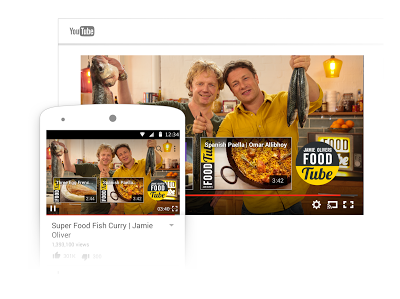
      You know those little call-out boxes that pop up while a video is playing? Those are annotations. And while YouTube recently announced they’ll be replacing annotations with end cards, this is still a feature you can use on desktop versions of your YouTube videos.
      Using your Video Manager settings, you can create annotations and include copy that asks viewers to subscribe to your channel, join your email list, or click on the link to another video from your channel.

      17. Use End cards/screens

      Want to end your videos with a bang and ensure your viewers come back for more? End screens uses the last few seconds of a video to encourage users to further engage with your content or channel (depending on your goals). They often point to another video from your channel or encourage subscriptions.
      18 Smart Ways to Promote Your YouTube Channel | Hootsuite Blog
      Image via YouTube Help.
      According to YouTube, this high-impact feature (which shows up on both desktop and mobile) can help accomplish the following tasks:
      • Point viewers to other videos, playlists, or channels on YouTube
      • Call for subscriptions to your channel
      • Promote your website, merchandise, and/or crowdfunding campaigns
      End screens take up the final five to 20 seconds of your video. But keep in mind that your video has to be at least 25 seconds long to have an end screen.

      18. Allow video embeds

      Ensure your videos have embedding enabled so your viewers can easily share your content on their websites and blogs. This is an effective way for your brand to reach new audiences.
      How do you tell if embedding is enable? Just hit up your Video Manager’s advanced settings, look in your “Distribution options,” and make sure the “Allow embedding” box is checked.
      YouTube is an incredibly valuable and powerful social network. With the aforementioned tactics, you can promote your YouTube channel in a way that not only helps your business, but engages and builds your social media community.
Read More
  • Share This:  
  •  Facebook
  •  Twitter
  •  Google+
  •  Stumble
  •  Digg

Sunday, 6 May 2018

Mobile Communication Book for Ip university Syllabus

 May 06, 2018     No comments   

https://drive.google.com/file/d/1BH0vk_w4OGTw-aFVWbKYIC1CzN-MRdpm/view?usp=sharing

Read More
  • Share This:  
  •  Facebook
  •  Twitter
  •  Google+
  •  Stumble
  •  Digg
Newer Posts Older Posts Home

Labels

  • BCA papers (2)

Subscribe To

Posts
Atom
Posts
All Comments
Atom
All Comments

Translate

Wikipedia

Search results

Blog Archive

  • ▼  2019 (6)
    • ▼  September (3)
      • Inspirational and Motivational Quotes in Hindi
      • Inspirational and Motivational Quotes in Hindi:
      • Inspirational and Motivational Quotes in Hindi
    • ►  April (1)
    • ►  March (1)
    • ►  February (1)
  • ►  2018 (22)
    • ►  September (14)
    • ►  May (1)
    • ►  February (4)
    • ►  January (3)

Contact Form

Name

Email *

Message *

Popular Posts

  • Inspirational and Motivational Quotes in Hindi
    Inspirational and Motivational Quotes in Hindi: 151. नकारात्मक और सकारात्मक सोच में इतना फर्क है जितना पुरुष और औरत के ...
  • What is the cheapest foreign trip from India?
    1) The United Arab Emirates One of the most popular holiday destinations among the leisure travelers, UAE boasts of its stunning beauty an...
  • 25 Top-Rated Tourist Attractions in Dubai
    1. Burj Khalifa Burj Khalifa Dubai's landmark building is the Burj Khalifa, which at 829.8 meters is the tallest building in ...

Total Pageviews

Recent Posts

Blog Archive

  • September 2019 (3)
  • April 2019 (1)
  • March 2019 (1)
  • February 2019 (1)
  • September 2018 (14)
  • May 2018 (1)
  • February 2018 (4)
  • January 2018 (3)
Powered by Blogger.

Report Abuse

Inspirational and Motivational Quotes in Hindi

Inspirational and Motivational Quotes in Hindi: 151. नकारात्मक और सकारात्मक सोच में इतना फर्क है जितना पुरुष और औरत के ...

Sample Text

Copyright © Allinone | Powered by Blogger
Design by Rajat Kumar Jha | Blogger Theme by NewBloggerThemes.com